
Last updated October 30, 2026
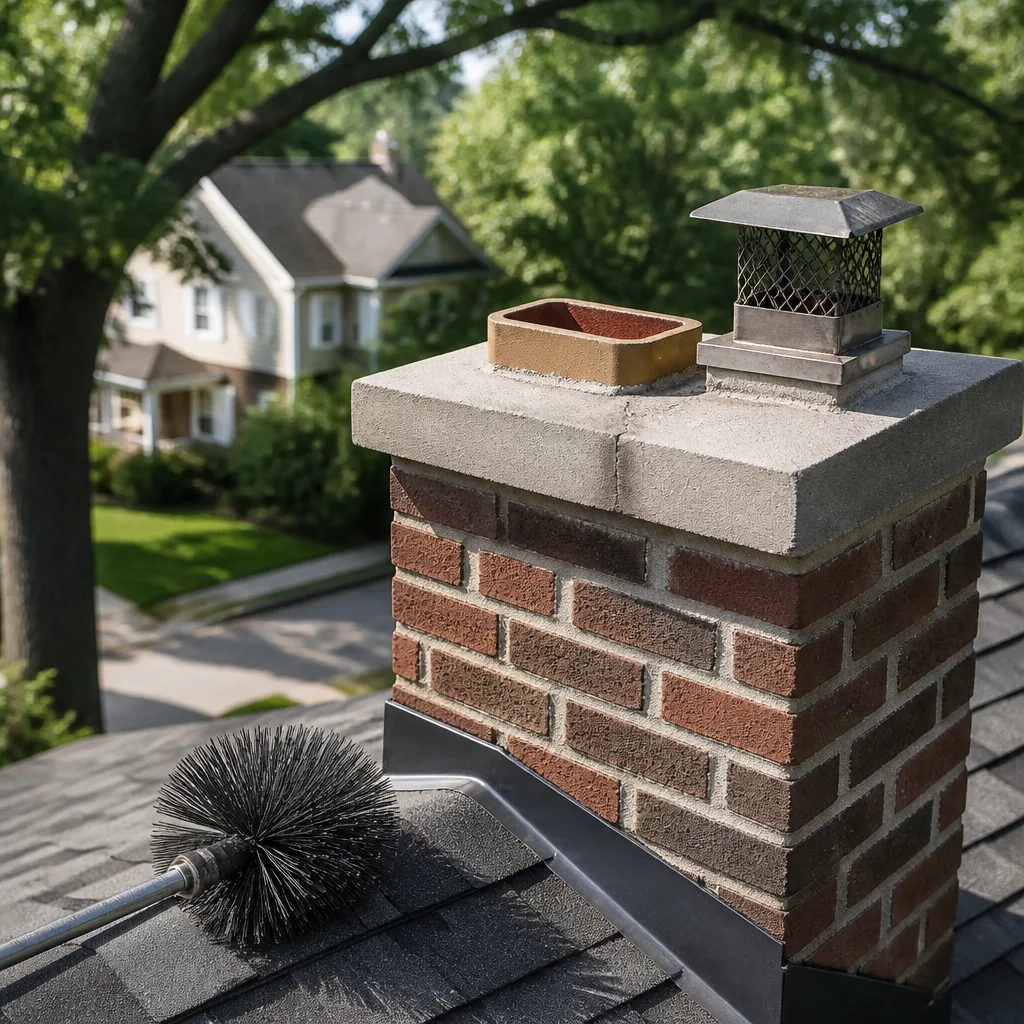 Sweep & inspection
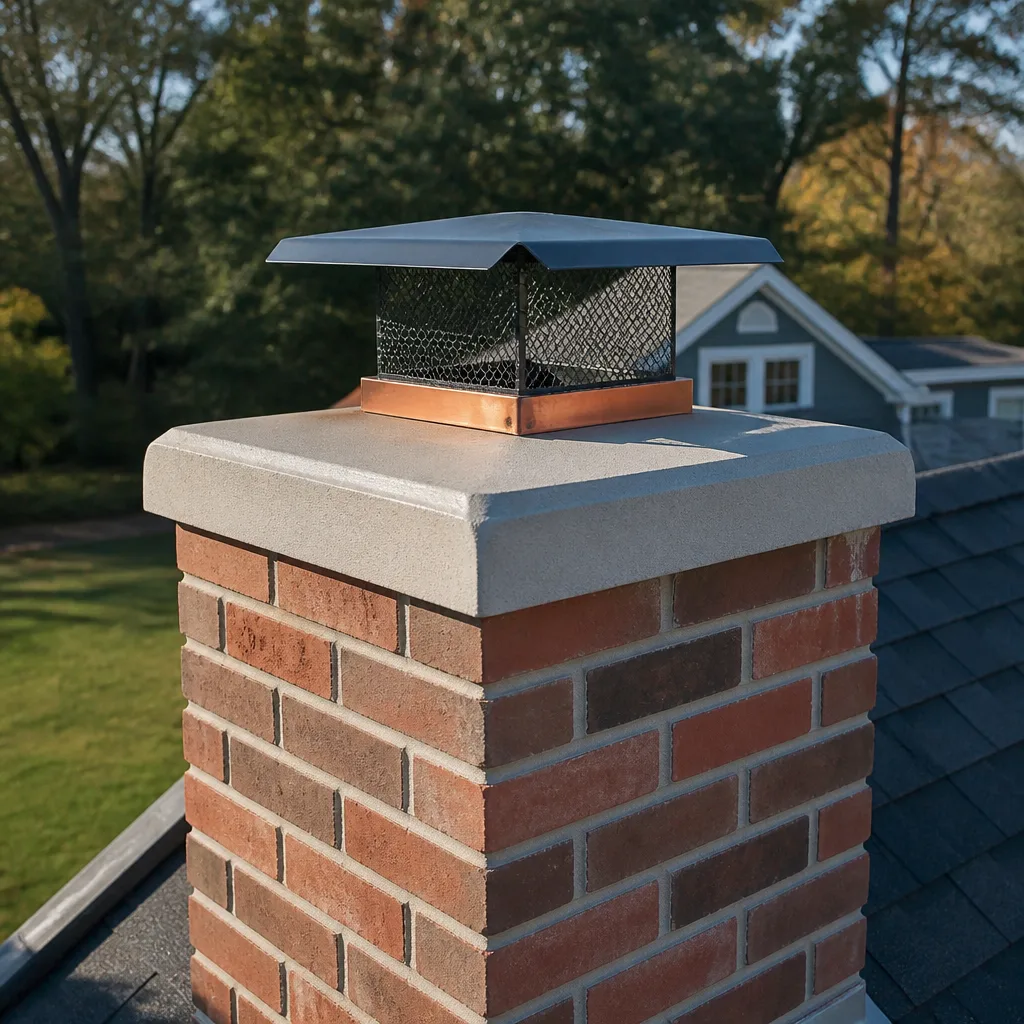 Caps & crowns
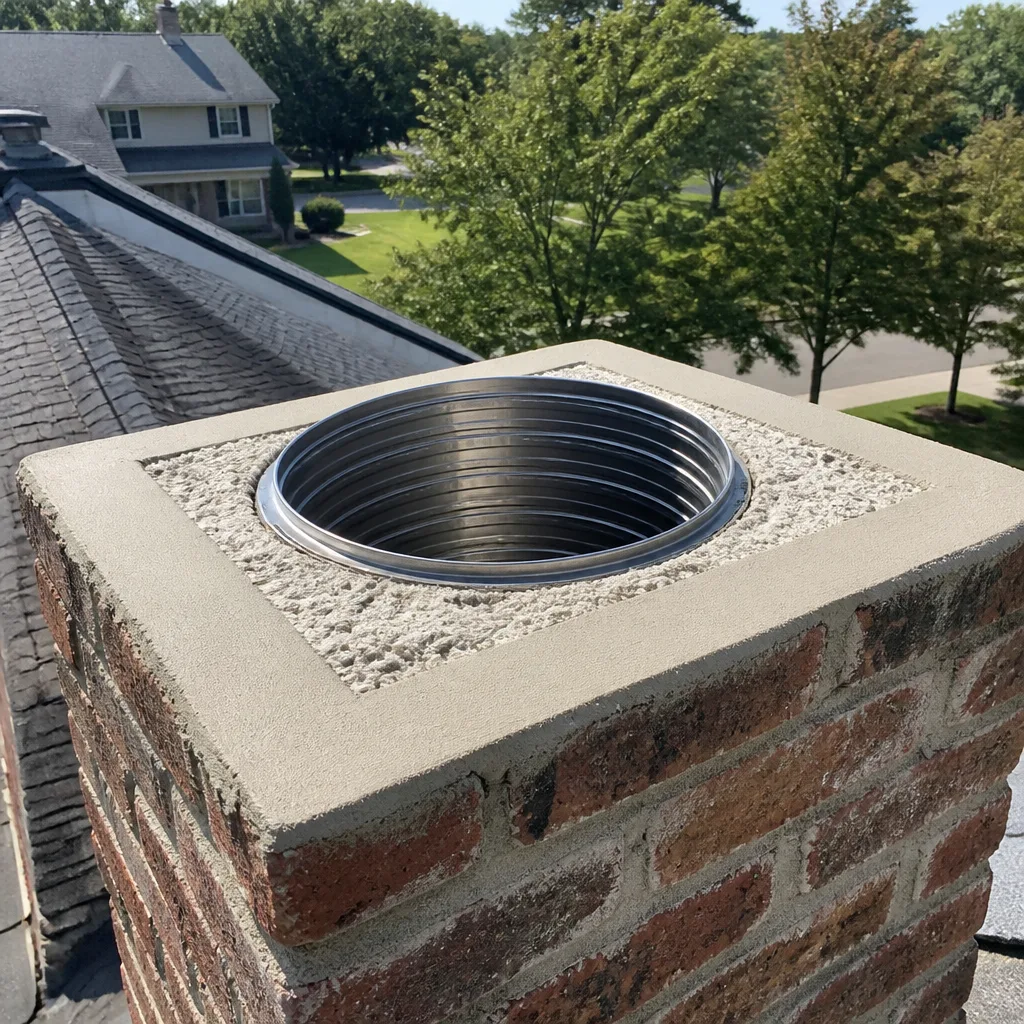 Flue relining
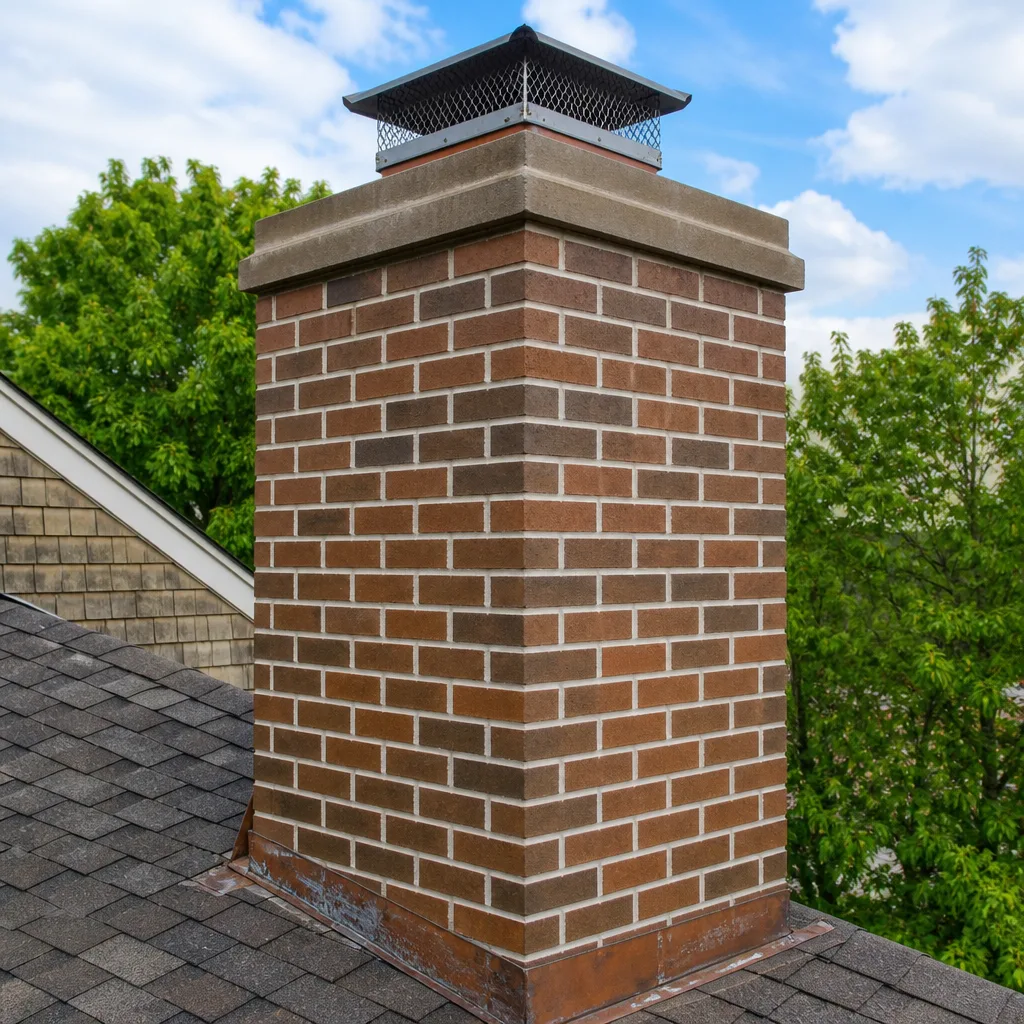 Masonry repair
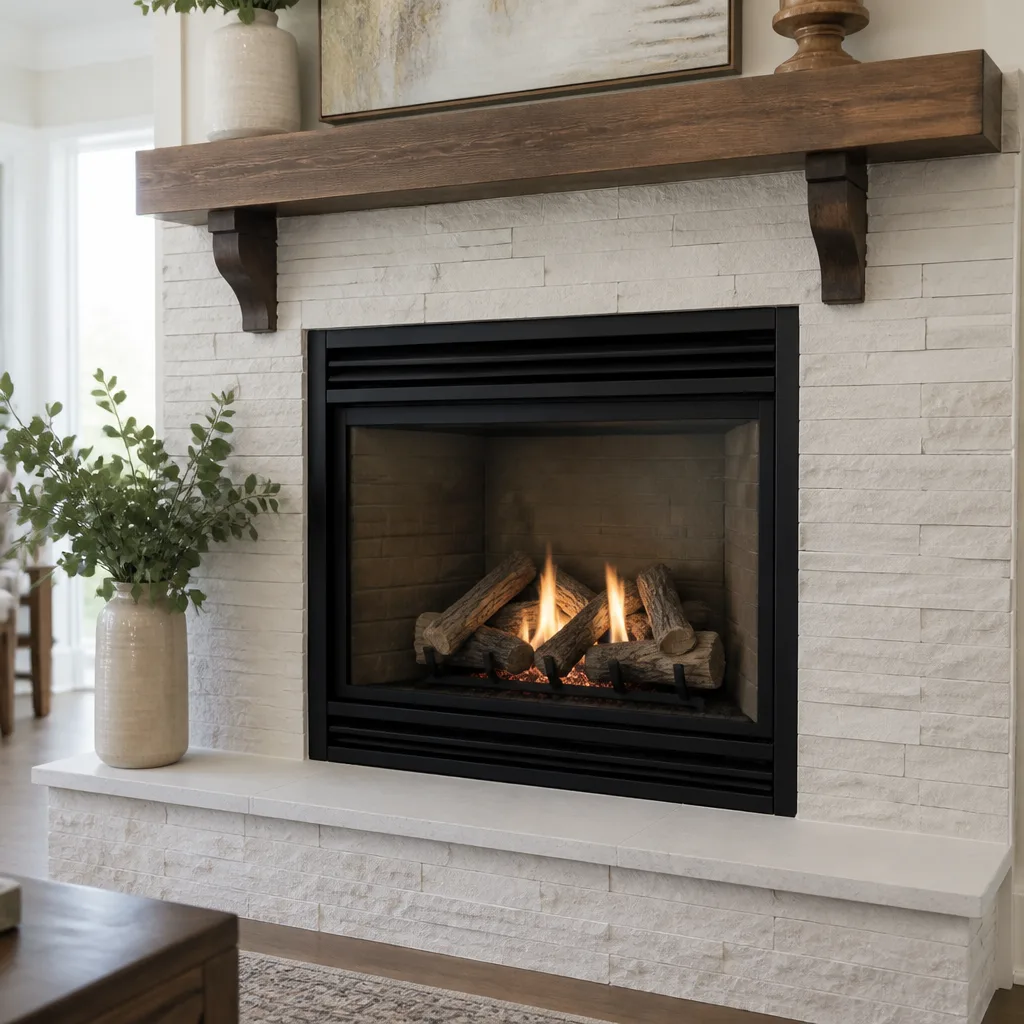 Gas fireplace service
Level 1 sweep and inspection to the NFPA 211 annual standard - flue, crown, cap, and flashing checked and photographed
Chimney sweep logs do not sweep chimneys. They loosen some creosote - which then falls where a brush and vacuum still have to collect it.
Seasonal Chimney Cleaning Care for Victorville: Year-Round Homeowner’s Guide
Victorville doesn’t follow the chimney-care calendar that most national guides assume. Telling a High Desert homeowner to “clean in fall before fireplace season” ignores a simple fact: fall here is also peak Santa Ana wind season, active fire season, and often the worst possible time for a blocked or damaged flue to go unnoticed. This guide replaces generic seasonal advice with a Victorville-specific plan built around what actually happens to chimneys in the High Desert, and you can find Chimney Cleaning Emergency Preparedness Guide for Victorville Homes alongside other resources: extreme temperature swings, wind-driven debris, dry summers that crack mortar, and a burning window that starts late and ends early. You’ll learn what to check before the first fire, what to watch during active burning months, how to shut down correctly in spring, and why summer is not the “off season” most homeowners assume it is.
Quick Answer
Seasonal chimney care in Victorville comes down to four distinct windows: prep and inspect before the first burn in late October or November, monitor burning conditions monthly through winter, cap and moisture-seal in spring, and handle heat-driven mortar checks plus pest prevention in summer. The single most important action is a professional inspection and sweep before the first fire of the season, because High Desert wind deposits, summer pest activity, and dry-heat mortar cracking all create risks that a visual check from the hearth cannot catch.
Styles & brands we work with
Table of Contents
- Pre-Burning Season Prep: Late October Through November
- Mid-Winter Maintenance During Active Burning
- Post-Season Shutdown: Why Spring Capping and Sealing Matters in the Desert
- Summer in the High Desert: Heat, Pests, and the Slow Season That Isn’t
- Dryer Vent Seasonal Demand: How It Aligns With Chimney Care
- Why Material Choice Matters in Victorville’s Climate
- Common Mistakes to Avoid
- When to Call a Professional
- Frequently Asked Questions
Pre-Burning Season Prep: Late October Through November
The first fire of the season in Victorville typically happens around Halloween or early November, once evening temperatures drop into the 40s. That first burn is also the moment a summer’s worth of accumulated problems reveals itself, and not always safely. Here’s what we recommend checking before you strike a match.
- Clear the chimney cap and crown area. High Desert winds push tumbleweed fragments, pine needles from higher elevations, bird nesting material, and fine sand into chimney caps and spark arrestors between May and October. A partially blocked cap restricts draft and sends smoke back into the living room. If your cap is missing or damaged, replace it before burning season starts.
- Test the damper. Open and close the damper fully several times. A damper that sticks, creaks, or doesn’t seat fully can let heated indoor air escape all winter or spill smoke into the room when you burn. In Victorville’s dry climate, damper hinges and cables corrode more slowly than in coastal areas, but fine dust accumulation is enough to cause binding.
- Check the firebox for cracks and missing mortar joints. The firebox takes direct flame heat every time you burn. Summer heat in Victorville causes the firebrick and refractory mortar to expand and contract repeatedly, which opens hairline cracks that widen under winter firing. Look for gaps larger than a nickel between firebricks, especially along the back wall and floor.
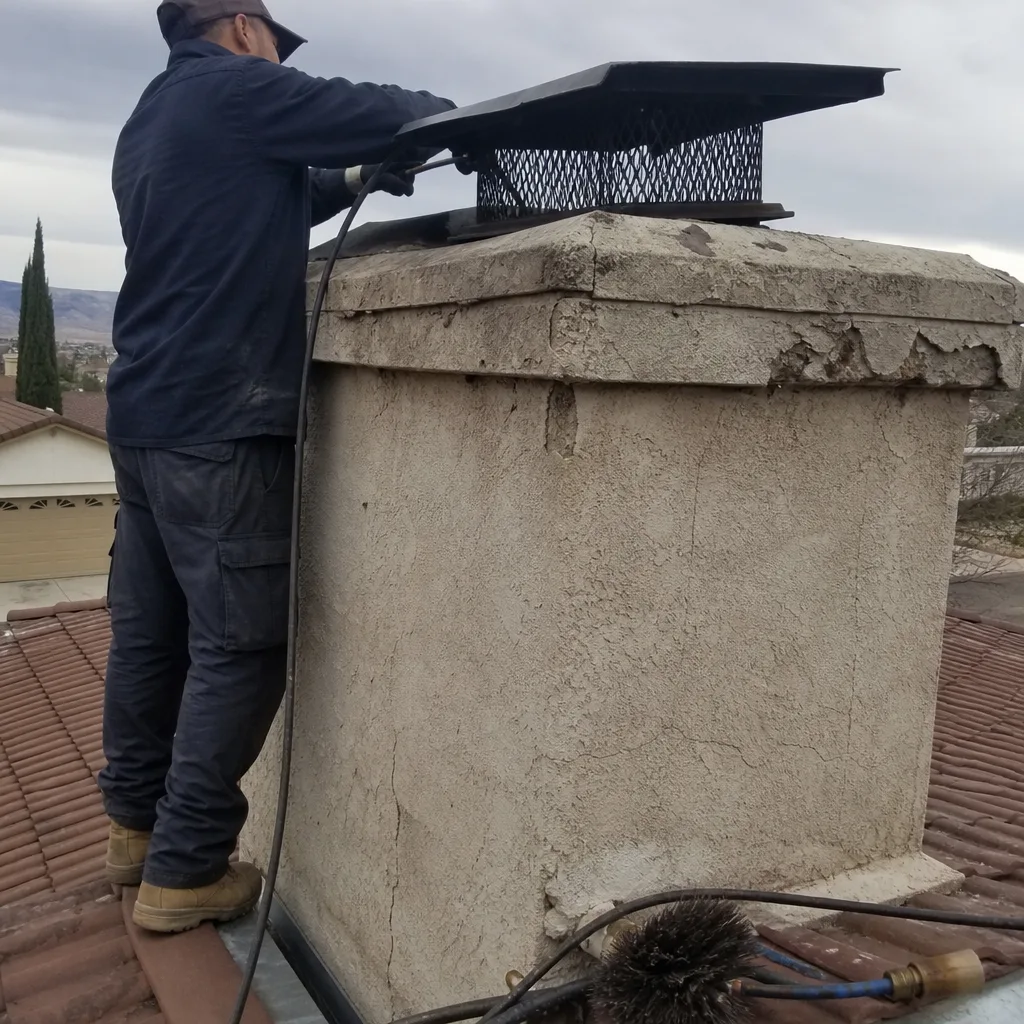
- Schedule a professional sweep and inspection. Even if the chimney was swept last spring, the off-season brings changes: animals move in, mortar shifts, caps loosen in wind, and creosote from last year’s late-season fires can harden into a glaze that a standard wire brush won’t remove. A chimney sweep in Victorville includes a camera inspection that shows what’s happening inside the flue before the first fire, not after smoke fills the room.
One thing we see regularly in Victorville homes: homeowners assume a summer of non-use means a clean chimney. The opposite is often true. The flue sits open to whatever the wind carries, and without regular heat to bake off residues, creosote from last winter absorbs moisture and becomes sticky, collecting dust and debris. That combination creates a more flammable surface than fresh creosote alone.
Mid-Winter Maintenance During Active Burning
Once burning season is underway, roughly December through February, your chimney talks to you. The key is knowing what to listen for. Most chimney problems in Victorville homes are caught not by an annual checkup but by a homeowner noticing a change: a new smell, a change in draft, or a fire that doesn’t behave like it did a month earlier.
What to Watch For During Active Burning Months
- Odor changes. A sharp, acrid smell that gets stronger as the fire burns hotter usually means creosote is accumulating faster than it’s burning off. A damp, musty smell on cold mornings means moisture is getting into the flue, often through a cracked crown or damaged cap. Both are reasons to stop burning and schedule an inspection.
- Draft reversals. If smoke puffs into the room when you open the stove door or when a gust hits the house, the draft is being interrupted. In Victorville, winter wind gusts routinely exceed 40 mph, and a chimney that drafts fine on a calm day may reverse under wind pressure against a poorly designed or partially blocked cap.
- Soot falling into the firebox. Visible flakes of black material dropping from above during or after a fire is a sign of significant creosote buildup in the flue. Burn with the damper closed only after the fire is completely out, and have the flue swept before the next burn.
- Sluggish fire behavior. A fire that struggles to establish, burns with a lazy orange flame, or produces more smoke than usual is often starving for air. The cause could be a partially blocked flue, a damper not opening fully, or negative pressure from the home itself. In tightly sealed Victorville homes, running kitchen and bath exhaust fans while burning can pull combustion air backward through the fireplace.
The rule for mid-winter is simple: burning changes are diagnostic signals, not things to tolerate. A properly functioning chimney behaves the same way burn after burn. When it doesn’t, the cause is usually visible to a trained eye, and waiting until spring to look means either living with a degraded system or burning through the season with elevated risk.
Post-Season Shutdown: Why Spring Capping and Sealing Matters in the Desert
By late March, most Victorville fireplaces go cold and stay cold until fall. What you do at shutdown determines what you find at the next startup. The two most important spring actions are capping and moisture sealing, and in the High Desert, they matter more than in almost any other climate in California.
Here’s why: Victorville’s freeze-thaw cycle is real. Winter nights regularly dip below freezing, while daytime highs climb into the 50s and 60s. Any moisture that has worked into the chimney crown, the mortar joints, or the masonry itself freezes at night and expands, then thaws and contracts the next afternoon. That cycle, repeated dozens of times each winter, is how small cracks become structural gaps. By spring, those gaps are wide open and waiting for rain, snowmelt from the mountains, and wind-driven moisture to enter.
A proper shutdown includes:
- Sweep after the last planned fire of the season. Creosote sits in the flue all summer either way. Sweeping at shutdown removes the fuel source and means the chimney is clean the day you stop burning, not a week before you start again next fall. It also removes the acidic residue that corrodes flue liners during months of disuse.
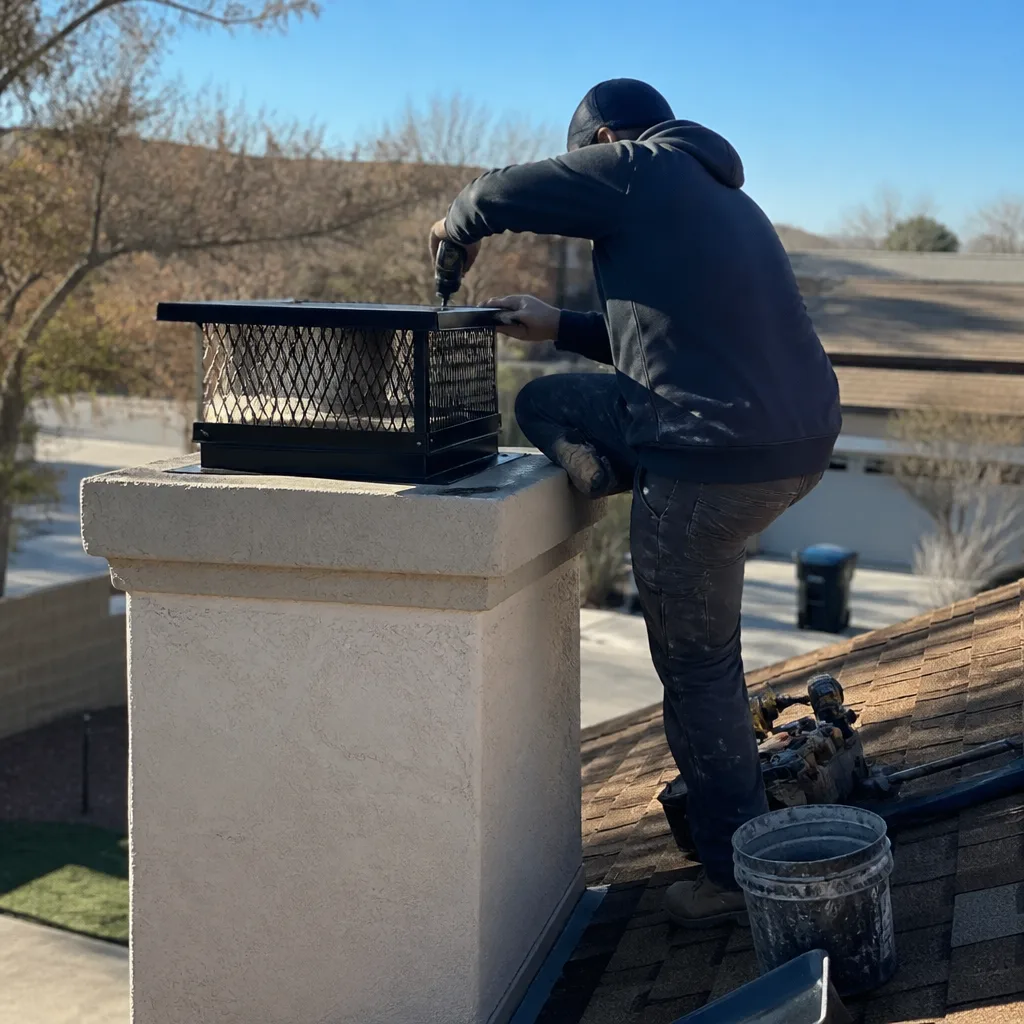
- Install or repair the chimney cap. A cap with a proper spark arrestor keeps out birds, rodents, leaves, and wind-driven debris. In Victorville, caps also prevent embers from escaping during windy winter burns. A missing cap is an open invitation for a bird nest by May, and bird nesting material inside a flue is both a fire hazard and a carbon monoxide blockage risk the following winter.
- Apply a breathable water repellent to the masonry. Desert homeowners sometimes assume waterproofing is a rainy-climate concern. It’s not. Wind-driven moisture, morning frost, and the occasional heavy desert storm all attack exposed brick and mortar. A breathable siloxane-based repellent lets moisture escape from inside the masonry while blocking outside water from soaking in. Trapped moisture is what destroys chimney structures in freeze-thaw climates.
- Close the damper, but not completely. A fully closed damper traps humidity inside the flue, which accelerates creosote corrosion and mortar deterioration. Leave a small gap or install a top-sealing damper that keeps out pests and downdrafts while allowing minimal airflow.
If you skip the post-season sweep and rely instead on a pre-season cleaning every fall, you’re functionally storing six months of creosote and soot inside your home’s chimney system during the driest, windiest part of the Victorville year. A spring sweep is not redundant. It’s protective maintenance.
Summer in the High Desert: Heat, Pests, and the Slow Season That Isn’t
Summer is when Victorville chimneys go largely ignored, and it’s precisely when several distinct problems develop. The High Desert summer is not gentle: daytime highs routinely exceed 100 degrees, surface temperatures on exposed masonry climb far higher, and the air is dry enough to pull moisture from any material that holds it.
Heat-Driven Mortar Expansion and Cracking
Brick and mortar expand when heated. A chimney crown exposed to direct sun on a 105-degree Victorville afternoon can reach 140 degrees or more. At night, it drops into the 60s. That daily expansion-contraction cycle, repeated for four or five months straight, works on every mortar joint in the chimney structure. Crowns crack. Joints open. Flashing separates from the roofline. By the time burning season returns, a chimney that was structurally sound in April may have developed openings that let water, pests, and heat escape into the home.
The fix is not to avoid the heat. It’s to inspect during or after the summer season. A summer inspection catches heat-related cracks while they’re small enough to address with tuckpointing or crown repair rather than a full rebuild. If you’re already having the chimney swept in spring, a visual check in August or September bridges the gap between shutdown and startup.
Pest Entry and Nesting
Victorville sits in a migration corridor and supports year-round populations of birds, squirrels, roof rats, and bats. A chimney without a cap or with a damaged cap is a nesting cavity. Birds build nests in flues as early as March. Squirrels and rats settle in by June. Bat colonies establish themselves in July. Each of these creates a different problem: nesting material is flammable, droppings harbor disease, and a dead animal in a flue produces an odor that spreads through the house in summer heat.
Prevention is mechanical. A properly fitted chimney cap with intact screening stops all of these animals. If you hear scratching, chirping, or fluttering from the chimney area in summer, do not light a fire to smoke them out. That kills animals needlessly, creates a fire hazard, and frequently fails because the animal is in a smoke-free void. The correct response is removal followed by cap installation or repair.
Moisture Paradox of the Dry Season
It seems backwards, but Victorville’s driest season is when hidden chimney moisture does the most damage. Summer monsoon storms, typically arriving July through September, hit dry, cracked masonry with sudden, heavy water. A crown with heat-cracked fissures absorbs that water directly into the chimney structure, where it sits until the next heat cycle bakes it into steam pressure. The result is spalling brick faces, crumbling mortar, and interior plaster damage that appears months after the storm that caused it. A breathable masonry sealant applied before monsoon season is the most effective prevention.
Dryer Vent Seasonal Demand: How It Aligns With Chimney Care
At Pilgrim Chimney, we treat dryer vents as part of the same fire-safety picture as chimneys, and the seasons line up more than most homeowners expect. Winter is peak dryer use: heavier clothing, more frequent loads, and homes sealed against the cold all push lint accumulation faster. Summer brings a different risk profile: the same dry, hot conditions that stress chimney mortar also turn a lint-clogged dryer vent into a tinderbox, with the added threat of wildfire season putting extra demand on emergency response resources.
The practical takeaway for Victorville homeowners is simple: when you schedule your pre-burning chimney sweep in late fall, that’s also the right time to have the dryer vent inspected and cleaned. Both systems have accumulated a full summer and fall of debris. Both are about to enter their highest-use months. And both failures present as a house fire that a single service call could have prevented. Dryer vent cleaning in Victorville uses the same professional protocols as chimney work: access, mechanical removal, and verification that the vent is clear and properly terminated.
Spring is the second natural alignment point. When you shut down the fireplace and have the flue swept, the dryer has just completed its winter surge. A second vent cleaning at the same time, or at minimum a visual check of the exterior vent termination, catches winter accumulation before summer heat raises the stakes. Two fire risks, one specialist, two visits a year.
Why Material Choice Matters in Victorville’s Climate
The High Desert punishes cheap materials. Hardware-store patch kits, big-box chimney caps, and budget liners fail early and often in Victorville’s combination of extreme heat, wind, and freeze-thaw cycling. That’s why we use professional-trade materials that are built for exactly these conditions, not consumer-grade substitutes.
When a chimney needs a new liner in Victorville, the choices matter. Stainless steel systems from Gelco and Olympia Chimney are built to handle the thermal cycling that High Desert chimneys experience, maintaining integrity through years of heating and cooling without the warping and cracking that cheap alternatives develop. Caps and dampers from Copperfield and Famco are engineered for high-wind environments and designed to seat properly on standard masonry crowns, which means fewer callbacks for gaps, rattles, and wind-driven downdrafts.
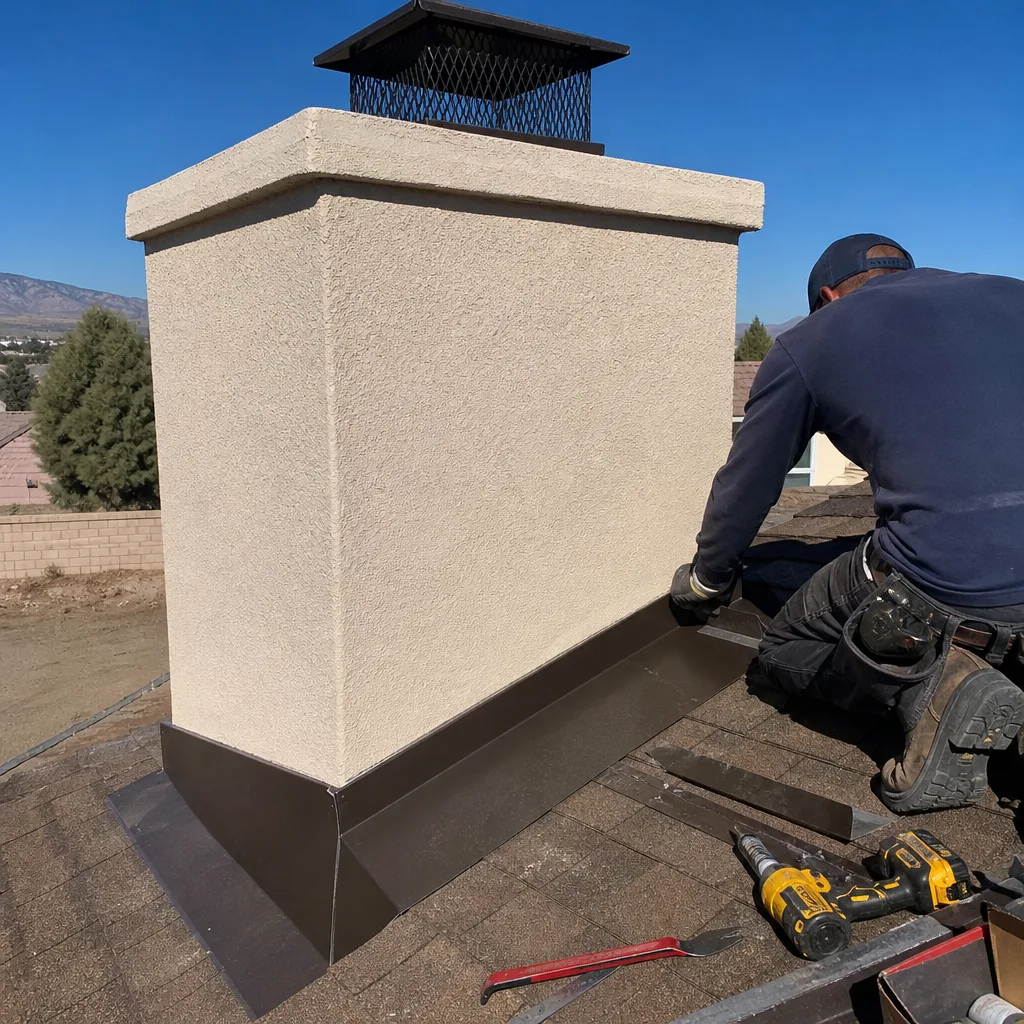
The difference shows up most clearly in repair work. We see chimneys every season where a previous owner or a previous contractor installed a big-box cap that rusted through in two years or a mortar patch that crumbled after one winter. The materials we use are the same ones certified chimney technicians specify for new construction and major rehab work. When we repair a crown, rebuild a firebox, or restore a flue with HeatShield resurfacing, the work is meant to outlast the original construction, not buy another season or two.
For Victorville homeowners with older masonry chimneys, HeatShield resurfacing deserves specific attention. Traditional full-liner replacement is expensive and sometimes unnecessary when the damage is limited to spalled flue tiles or minor cracking. HeatShield is a professional resurfacing system that restores the interior flue surface to a smooth, insulated, zero-clearance condition, applied by technicians trained in the system. Most sweep-only companies in the High Desert cannot offer this option, which means they either refer the work out, charge for a full replacement that wasn’t strictly needed, or leave the damage unresolved. Chimney repair in Victorville is a core service at Pilgrim, not a referral to someone else, and the distinction matters when you’re told a flue needs work and want the option that fits both the damage and the budget.
Common Mistakes to Avoid
- Waiting until the first cold snap to schedule a sweep. By the time Victorville hits its first week of below-freezing nights, every chimney company in the High Desert is booked out. Schedule the pre-season sweep in September or October, before demand peaks, and you’ll be burning safely on the first cold night instead of waiting two weeks for an opening.
- Assuming a summer of non-use means a clean chimney. The flue is open to wind, dust, and pests for six months. What accumulates is not creosote, but it’s still flammable, still blocks draft, and still needs to come out before the first fire.
- Burning pine and other softwoods because “that’s what’s available.” Softwoods burn hot and fast, but they also produce more creosote per cord than seasoned hardwoods. In Victorville, where many homeowners burn whatever is available locally, mixing in pine and juniper without more frequent sweeping accelerates buildup. Burn seasoned hardwood when possible, and burn hot, short fires rather than smoldering overnight burns.
- Ignoring a damaged or missing chimney cap. A missing cap is not a cosmetic issue. It is a standing invitation for birds, rodents, debris, and water. In the High Desert, wind drives all of those into a flue with surprising force. Cap replacement is one of the least expensive and most protective chimney repairs available.
- Patching cracked mortar with hardware-store products. The refractory cements and mortar patches sold at big-box stores are not formulated for chimney firebox conditions or for Victorville’s expansion cycles. They fail, often within a single season, and when they do they leave the original crack worse than before. Professional firebox and crown repair uses materials rated for direct flame exposure and thermal cycling.
- Treating dryer vent cleaning as optional or occasional. The leading cause of residential dryer fires is lint accumulation in the vent system. In Victorville’s dry, hot summers, that risk rises. A dryer vent should be cleaned annually at minimum, and more often for large households or homes with long vent runs.
- Skipping the spring sweep because “fall is the standard.” Creosote sits in the flue all summer either way. The question is whether it sits there as a clean system or as a fuel source and corrosion agent. Spring sweeping is protective maintenance, not redundancy.
When to Call a Professional
Some chimney work is appropriate for a careful homeowner: visual checks of the firebox, testing the damper, clearing visible debris from the cap area if you can safely access it. But the moment you encounter any of these, the right call is a professional inspection and repair: smoke entering the home during a fire, a persistent odor that gets worse when the chimney is heated, visible cracks in the firebox larger than a coin’s width, water staining on walls or ceilings near the chimney, animal sounds or nesting material in the flue, or any suspected creosote buildup you cannot see from the hearth. Chimney fires are not always dramatic; many burn quietly inside the flue and go unnoticed until structural damage is done. A professional inspection with a camera sees what a visual check cannot. Pilgrim Chimney offers free estimates in Victorville, call (866) 253-5031.
Frequently Asked Questions
Chimney Cleaning Cost Breakdown: The Victorville Homeowner’s Reference for 2026 shows that sweep pricing in Victorville typically ranges from $150 to $350 depending on the chimney’s condition, accessibility, and whether it includes a camera inspection. Factors specific to High Desert homes include excessive wind-blown debris, animal nest removal, and creosote glaze that requires mechanical removal rather than standard brushing. Call (866) 253-5031 for an exact quote for your chimney, estimates are free.
At minimum once per year, and twice per year for homeowners who burn more than a cord of wood per season, burn softwoods like pine or juniper regularly, or have an older masonry chimney with an unlined or partially lined flue. In Victorville’s dry climate, wood burns hotter and creosote forms in a drier, flakier form that accumulates quickly on flue walls and is more easily ignited than the sticky creosote common in humid climates.
Not always. Flue damage ranges from minor spalling to structural cracking, and the right fix depends on what the camera inspection shows. In many Victorville homes, HeatShield resurfacing restores a deteriorated flue to a smooth, insulated, fire-safe condition without the cost of a full liner replacement. A reputable chimney professional will show you the camera footage and explain exactly what the damage is and what options exist, not simply quote a replacement. Call (866) 253-5031 to schedule an inspection and see the condition of your flue for yourself.
Creosote accumulates inside the flue with each fire. Once the buildup reaches roughly one-eighth of an inch, it’s enough to ignite. That’s a chimney fire. Even if the fire doesn’t spread to the home structure, the heat can crack the flue liner, damage the chimney crown, and compromise the mortar joints. The damage isn’t always visible from outside, which is why a post-chimney-fire inspection matters even when no flame was seen. In the High Desert’s dry air, creosote reaches ignition thickness faster than in coastal climates because the residue stays dry and flaky rather than dense and sticky.
Yes, and in some ways it’s more important. Summer heat expands the masonry crown and chimney structure daily, opening hairline cracks that become water entry points during monsoon storms. Summer is also prime season for birds, squirrel, and rat nesting in uncapped chimneys, and that nesting material becomes a fire hazard the moment you light the first fall fire. A mid-summer visual check plus a properly fitted cap prevents most of these issues.
It’s an efficient pairing. Both systems accumulate flammable material continuously, both hit peak use in winter, and both failures present as a preventable house fire. Scheduling a dryer vent cleaning with your fall chimney sweep means a single visit addresses two of the most common residential fire risks. For large households or homes with long dryer vent runs, a second cleaning in spring is worthwhile.
The Bottom Line
Victorville’s chimney calendar runs on its own schedule, and it’s not the one you’ll find in a generic home-maintenance guide or among more guides & resources written for other climates. Pre-season prep happens in late October, not “sometime in fall.” Winter burning demands attention to odor, draft, and fire behavior changes. Spring shutdown is when capping and moisture sealing prevent next winter’s structural problems. And summer, far from being downtime, is when heat cracks open the masonry and pests move in. One professional sweep and inspection before the first fire, one dryer vent cleaning on the same visit, and a spring shutdown sweep cover the full year. That’s steady, methodical, thorough care, and in the High Desert, it’s the difference between a chimney that lasts decades and one that surprises you on the first cold night.
Written by the team at Pilgrim Chimney, serving Victorville since 2014.
See the difference
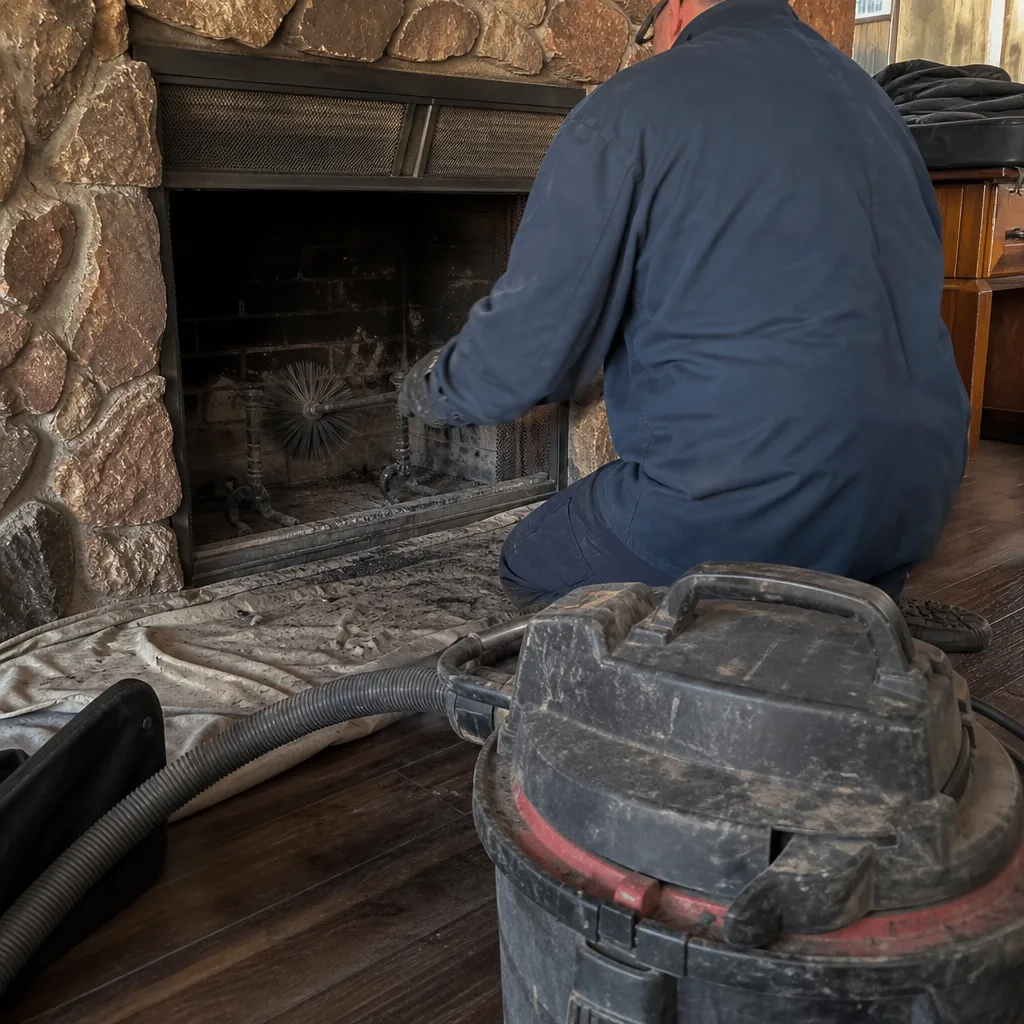 Before
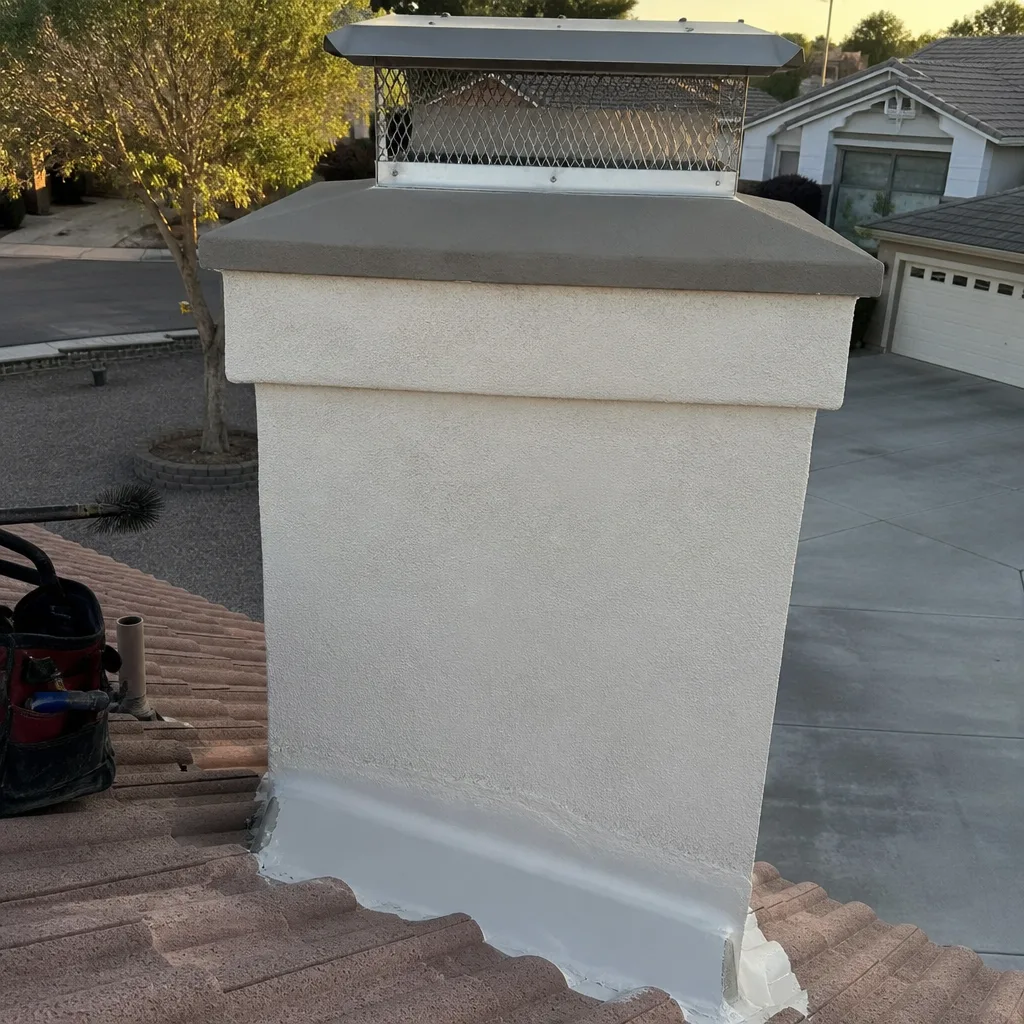 After
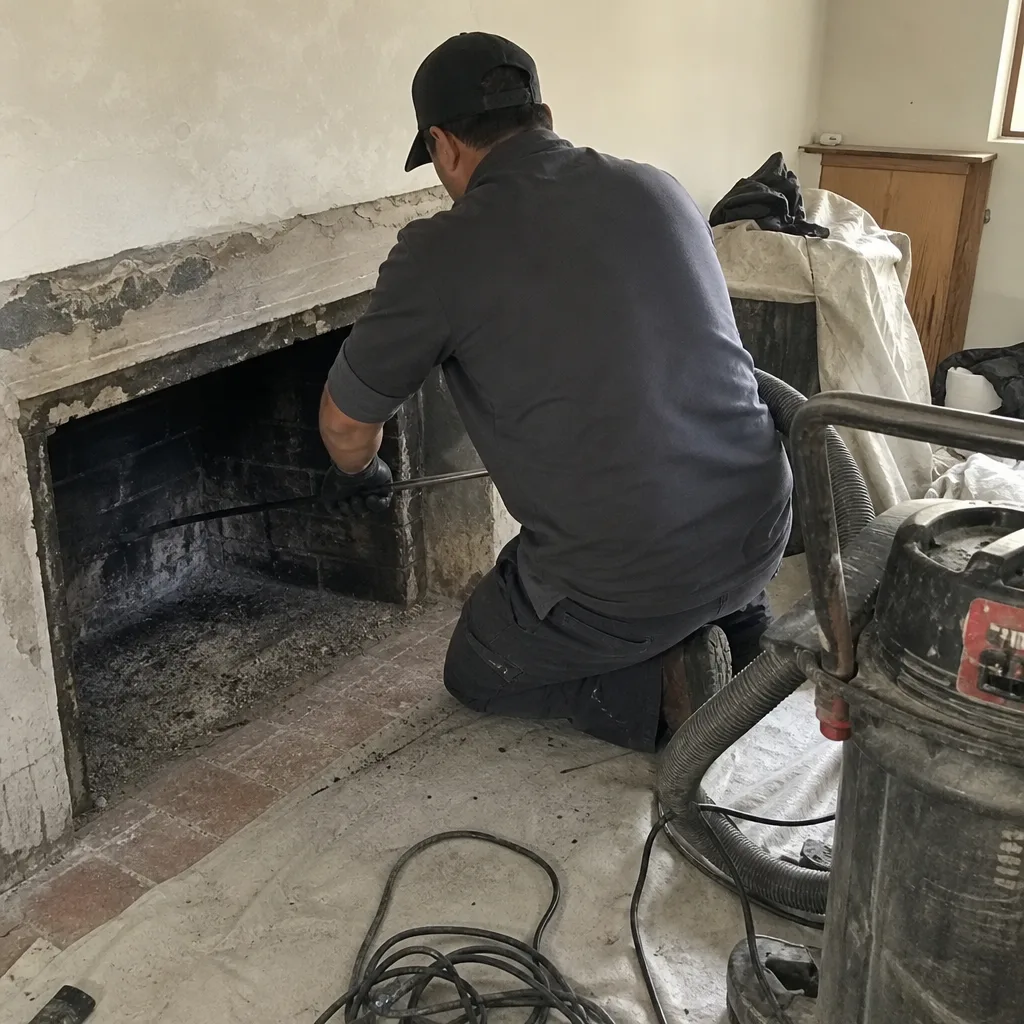 Before
 After
 Before
 After